
Animal Studies: Group-Based vs. Individual Subject Workflows
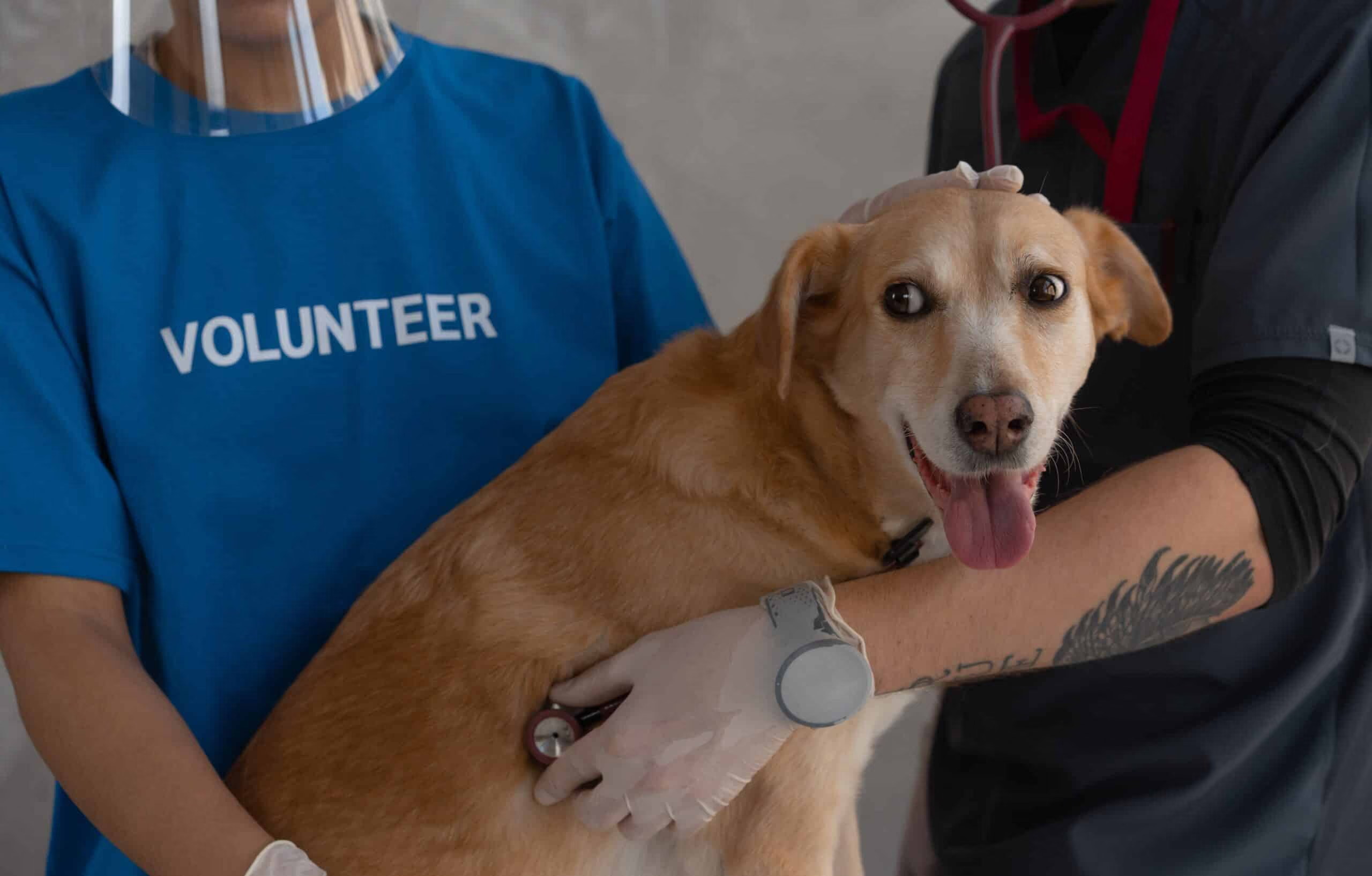
Planning an animal study’s workflow is an artform. Regulatory aspects such as GLP and GCP should be considered as well as the observation element (e.g., a single animal or a group) and the data collection flow (e.g., a line of cows or a single puppy at a clinic). Which workflow will boost data integrity and maintain compliance while streamlining animal study operations?
Single Subject – Clinical Setting
GCP studies evaluating therapeutics, nutrition, or quality of life are typically conducted in a clinical environment where a single subject is the observational unit. What animal study workflow platform features or capabilities can be used to facilitate this workflow?
- Align the study schedule and the layout and content of the electronic CRFs with the protocol. This promotes comprehension by site and study personnel and facilitates compliance.
- Use calculations to copy static information from one form to another. This increases data integrity by reducing data entry requirements – and saves time for site personnel.
- When observations can be made by subjects or subject owners, provide them with a mobile app that they can use to directly enter data into the study database. This method reduces transcription errors and promotes contemporaneous data entry.
- Automate as many calculations as possible (e.g., dosing) so that site personnel save time and avoid errors.
- For PK studies, use an animal study workflow platform that natively supports timed observations and sample collection.
Single Subject – Production Setting
Production environments pose their own unique challenges. Often, observations are made at the single subject level – but are done in a multi-subject setting where you never know which cow or pig is going to come through the chute next. In many cases, investigators resort to recording observations on paper – but this can be avoided. How?
- Use an animal study workflow system that integrates with devices such as an RFID wand to quickly identify individual subjects.
- Take advantage of bulk data entry capabilities if those are available. Bulk data entry allows data for multiple subjects to be entered on a single form and then pushed/propagated to the forms and database for the individual subjects.
- This avoids the logistical bottleneck of having to navigate to a different form for each subject.
- For large collections of subjects, make generalized observations about the group (e.g., “they’re all fine”) and then record deviations from this generalization. The two methods above can help with this.
- In some production environments, subjects are in a remote area where an internet connection is not available. Overcome this barrier by using an animal study workflow system that supports offline operation – allowing a mobile device to act as the data source.
Group of Subjects – Production/Facility Settings
For studies involving groups of subjects the observational unit is a collection such as a pen, cage, or tank. In addition to the workflow solutions above, there are some specific flows that are beneficial in these settings.
- Pre-clinical studies benefit from the ability to quickly and easily stand up a new study based on parameters such as the number of animal storage units, the number of animals per storage unit, and the randomization scheme.
- Some animal study workflow systems go beyond structuring data by sites and subjects and allow hierarchies such as facility >barn >subject. This allows for more natural and intuitive data collection.
- Organize forms by room, barn, cage, or tank with a list of subjects in each unit and use the bulk data entry workflow to push data down to individual subjects if needed.
- This allows for group-based data analysis and trending (i.e., calculate food conversion ratios of different feeds per individual storage unit and identify/eliminate the affect of different environments on results).
Prelude EDC supports the animal study workflows described above. Explore how we can optimize your clinical trial workflow.